BMW R80
M-E 114
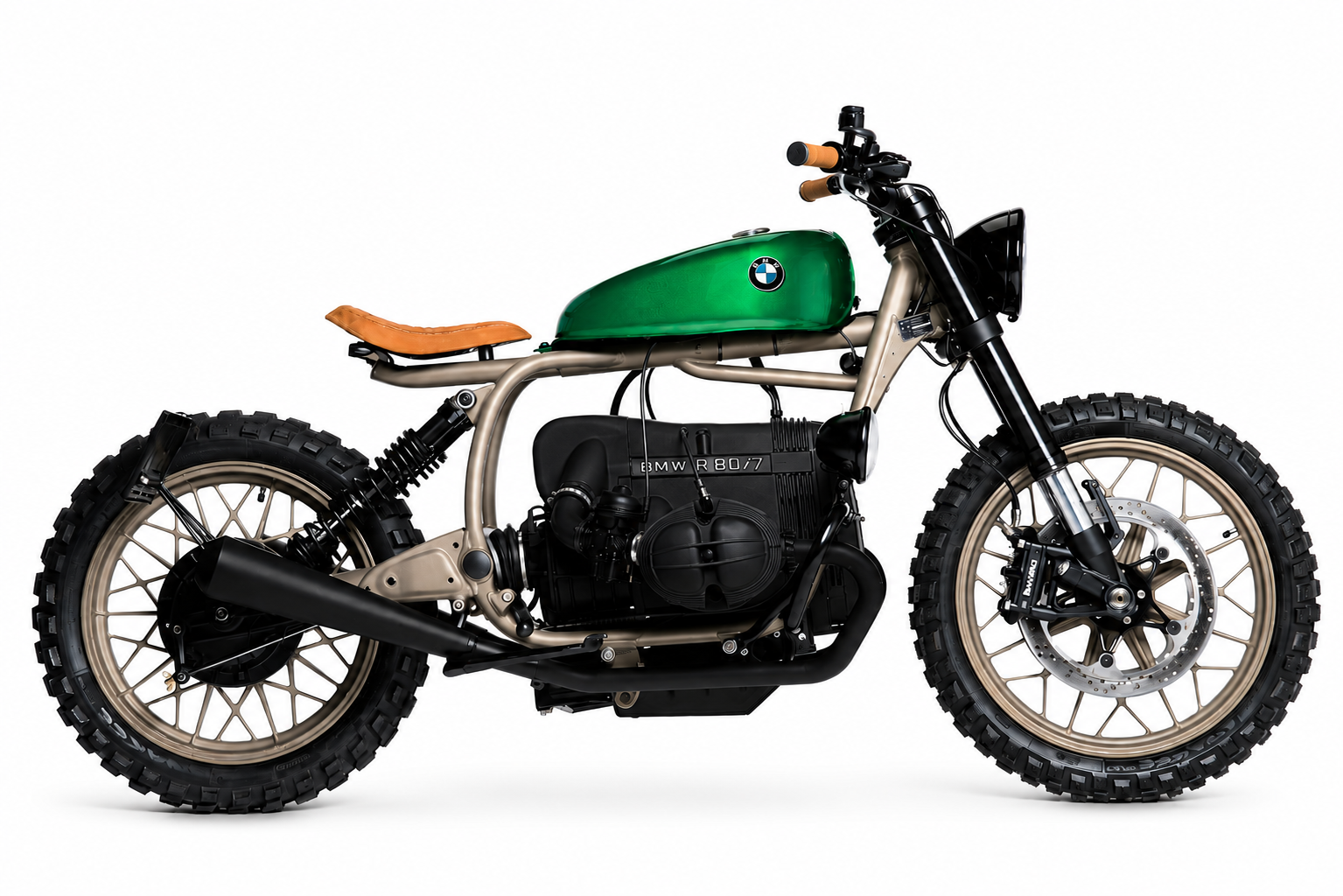
Minimalism is not about removing parts. It is about removing everything that distracts from the essence of the machine.
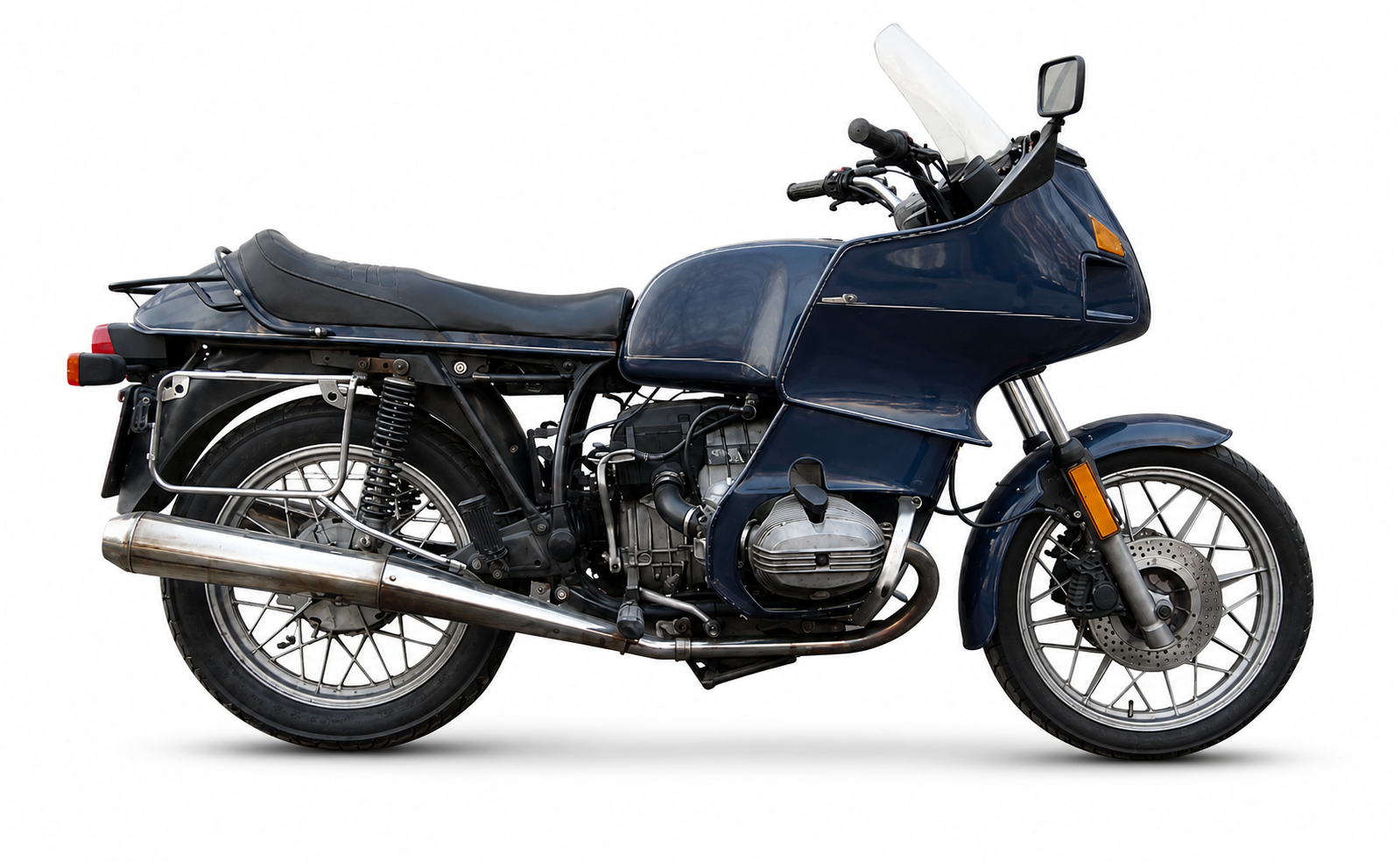
This build started life as a BMW R80RT, one of BMW’s most comfortable and versatile air-cooled touring motorcycles of the 1980s. Equipped with the legendary 800cc boxer twin and twin-shock rear suspension, the R80RT offered reliability, torque, and long-distance comfort. For this project, however, comfort was never the objective. The goal was to strip the motorcycle down to its absolute essence and reinterpret it as a radical, lightweight bobber.
One of the most challenging aspects of this project was not what was added, but what was removed.
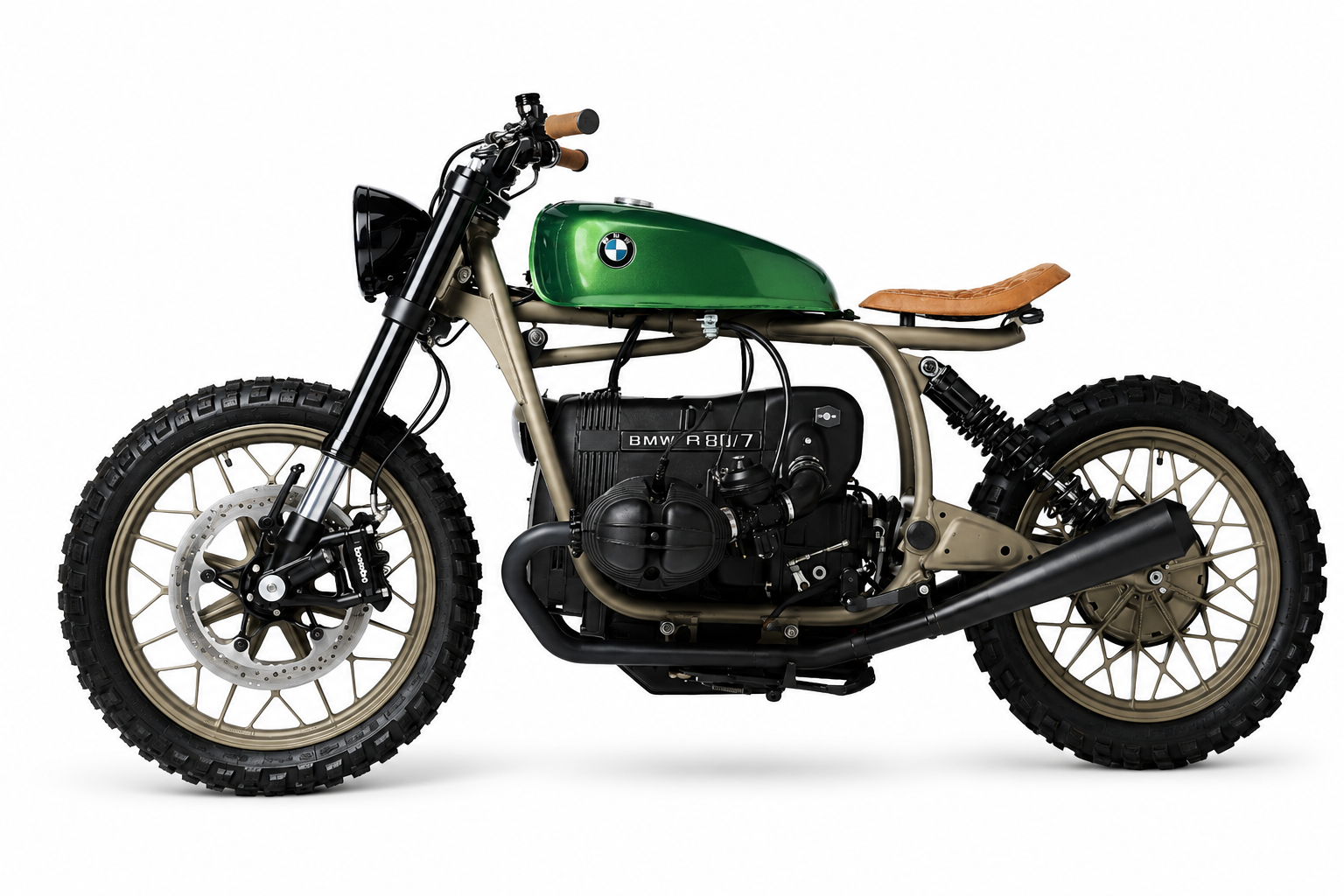
The frame and wheels were powder-coated in a highly distinctive matte bronze-beige finish developed specifically for this project. The color changes subtly depending on the light, sometimes appearing bronze, sometimes sand-colored, and occasionally almost titanium-like. This understated finish perfectly complements the minimalist concept while giving the motorcycle an unmistakable identity.
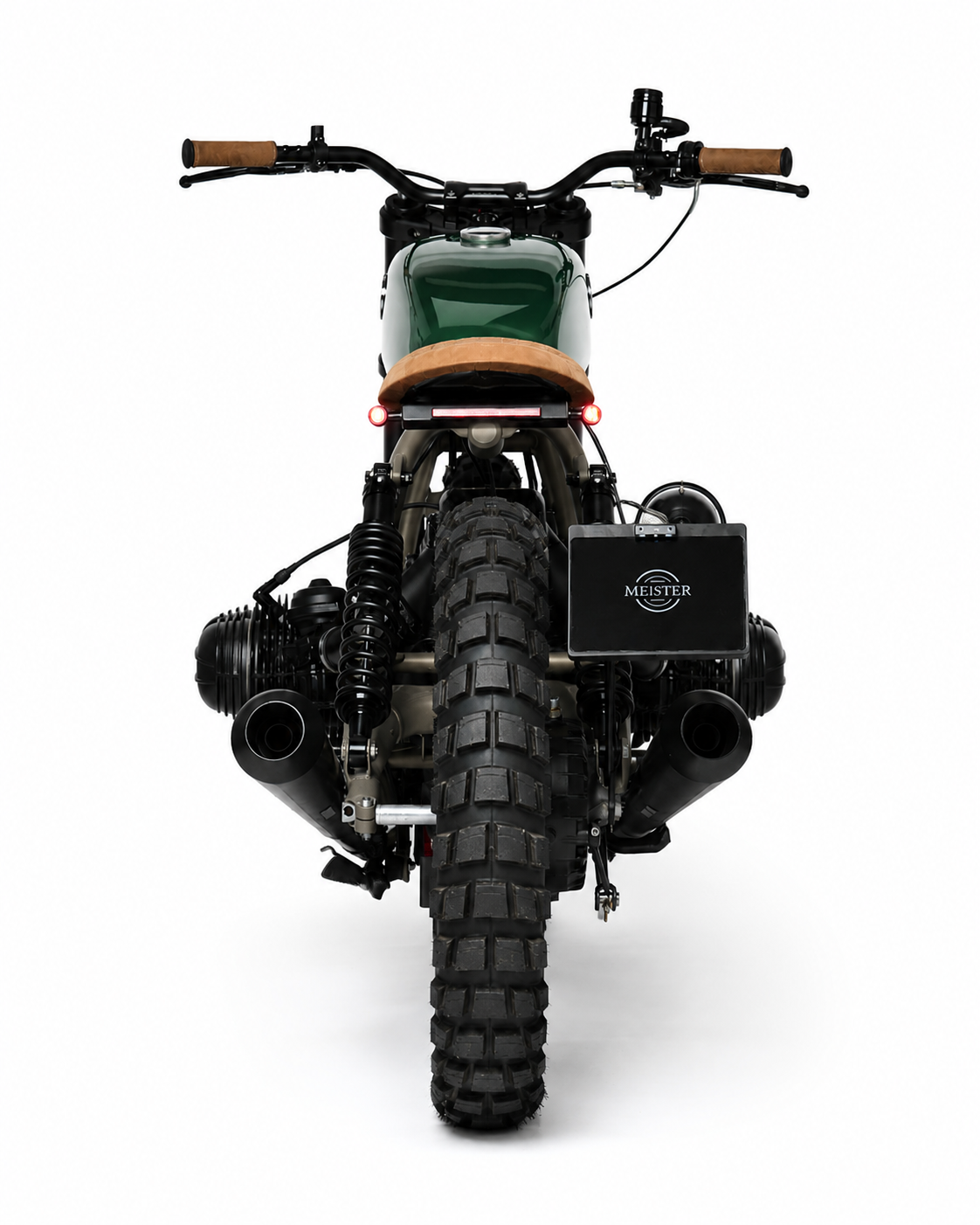
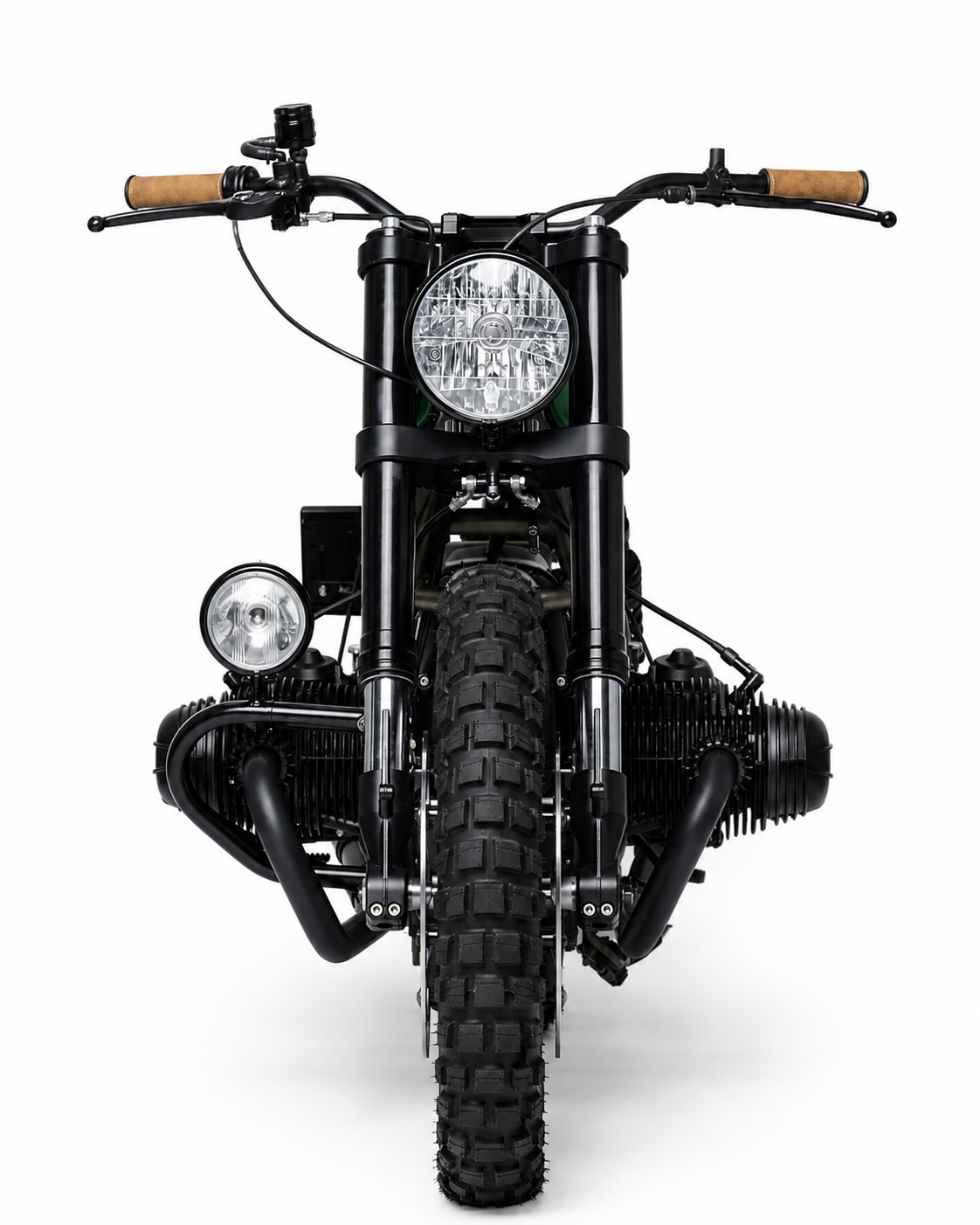
Although the motorcycle embraces classic bobber proportions, modern details are carefully integrated throughout. A large black headlight housing preserves the traditional appearance, while a transparent LED optical unit modernizes the lighting performance. Mounted deeply within the fork assembly, the headlight contributes to the low, aggressive profile that defines the front end of the motorcycle.
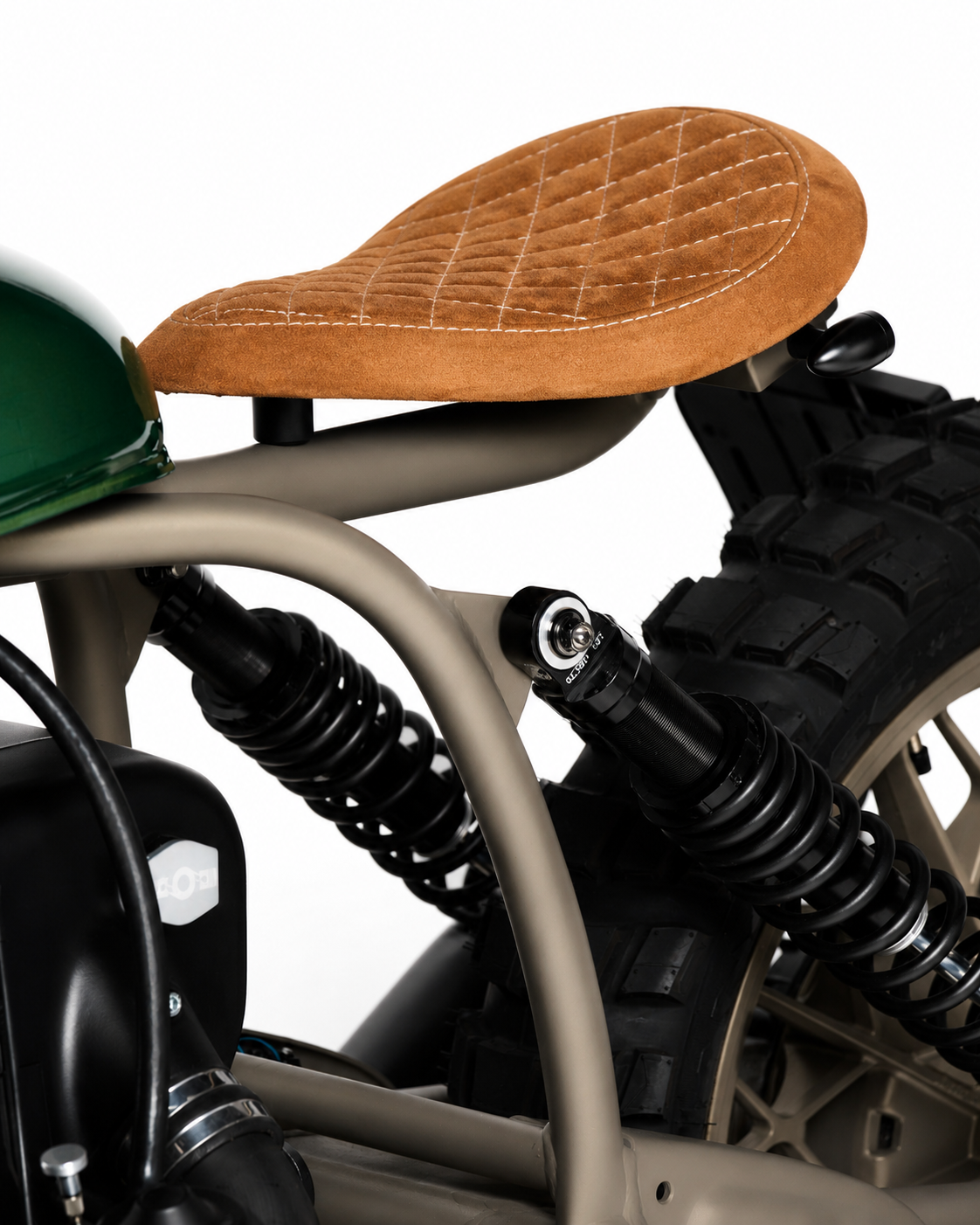
Electrical components, wiring, and technical elements were carefully integrated inside the frame tubes wherever possible. Every effort was made to hide visual clutter and leave only the essential shapes exposed.
To achieve the desired proportions, the original rear section was extensively redesigned. New shock mounting points were engineered and welded directly onto the frame, allowing the installation of longer rear shocks and creating a completely different stance. The result is a motorcycle that sits taller, looks lighter, and carries a much stronger visual presence while maintaining proper geometry and riding dynamics.
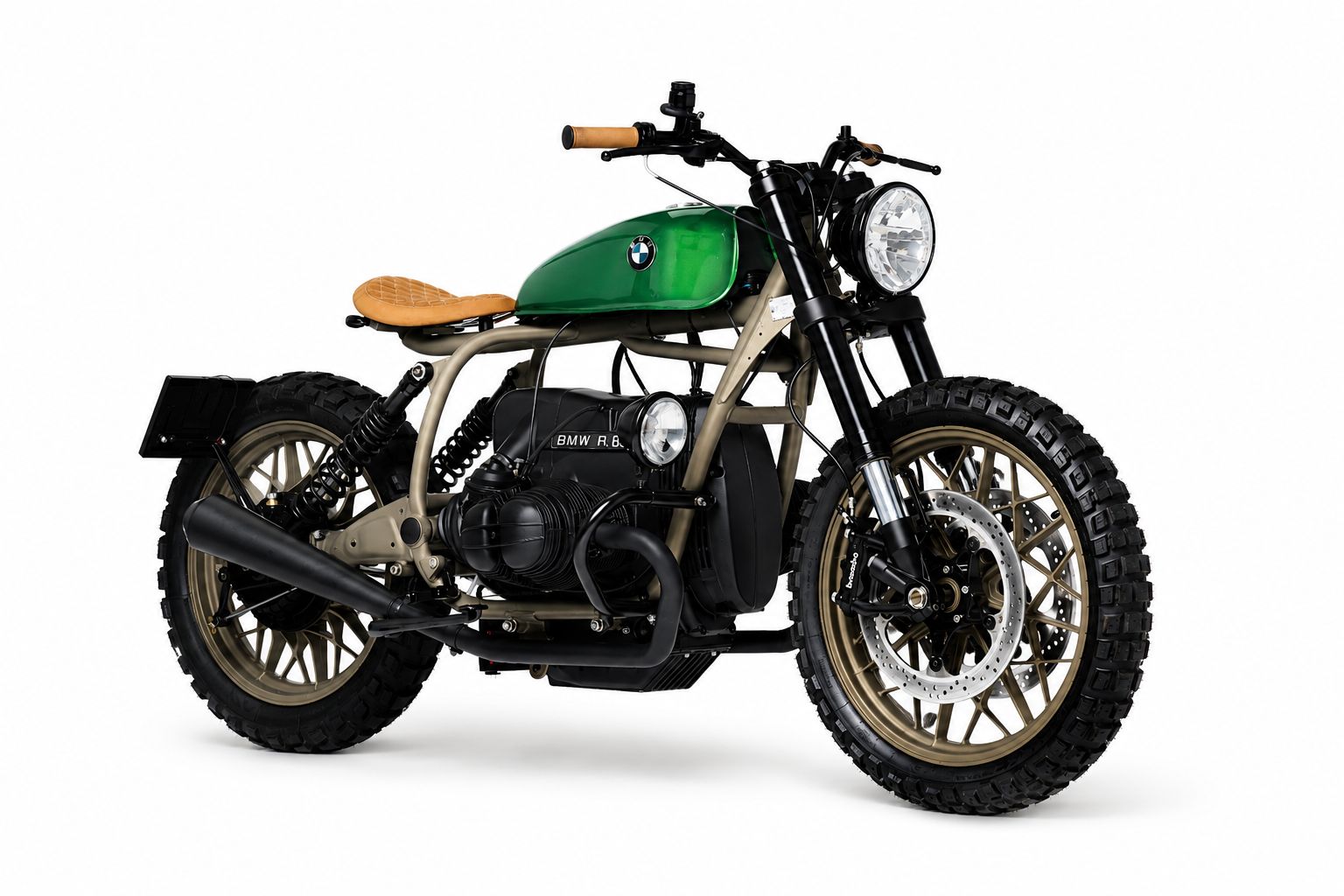
The rear frame was redesigned around a single idea: remove everything that does not need to be seen. A custom seat support extends naturally from the main frame backbone and carries an ultra-short bobber saddle. The entire rear section appears to float above the rear wheel, creating an exceptionally clean silhouette and emphasizing the mechanical beauty of the boxer engine.
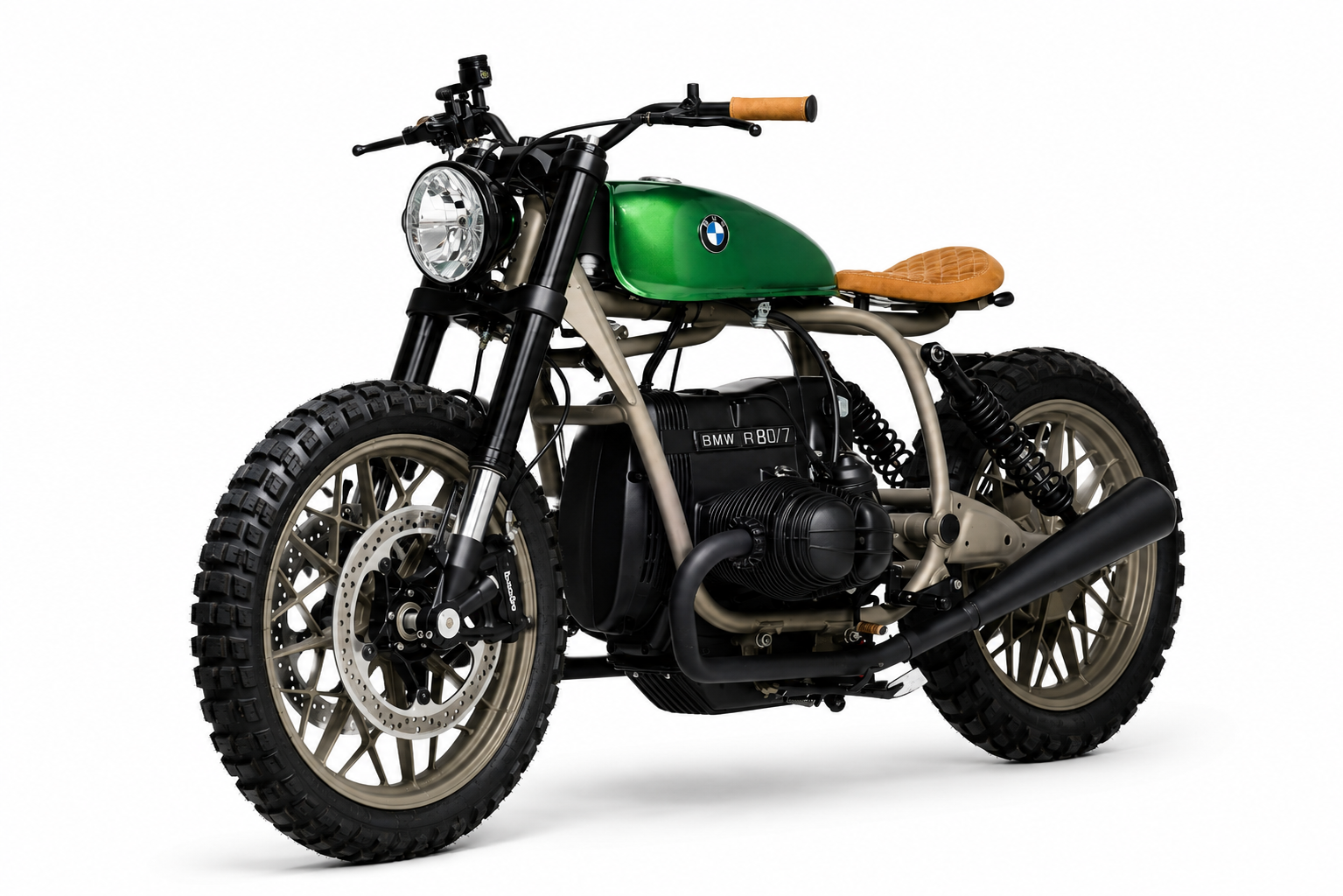
The narrow fuel tank and compact riding position completely transform the rider's relationship with the motorcycle. Sitting on this machine feels fundamentally different from riding a conventional BMW. The rider becomes part of the motorcycle, positioned directly between the two exposed cylinders. Combined with the significant weight reduction, the experience is raw, mechanical, and highly engaging, while still benefiting from the immense torque that makes BMW airheads so enjoyable.
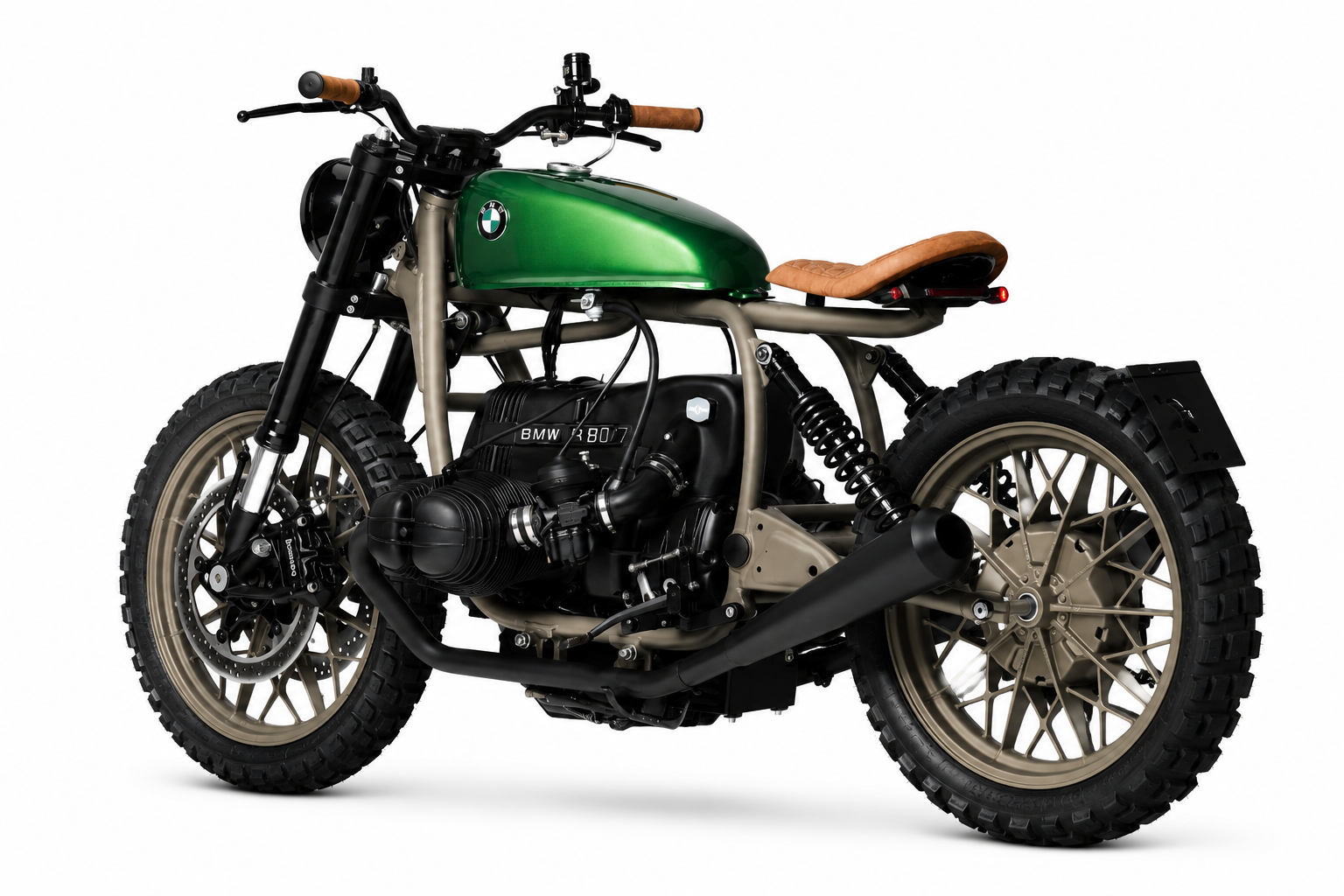
At the front, the original suspension was replaced with a modern inverted fork assembly, dramatically improving rigidity, braking feel, and overall riding confidence. The upgraded Brembo braking system delivers performance far beyond what the original R80RT could offer, while maintaining a visually balanced and cohesive design that respects the vintage character of the motorcycle.
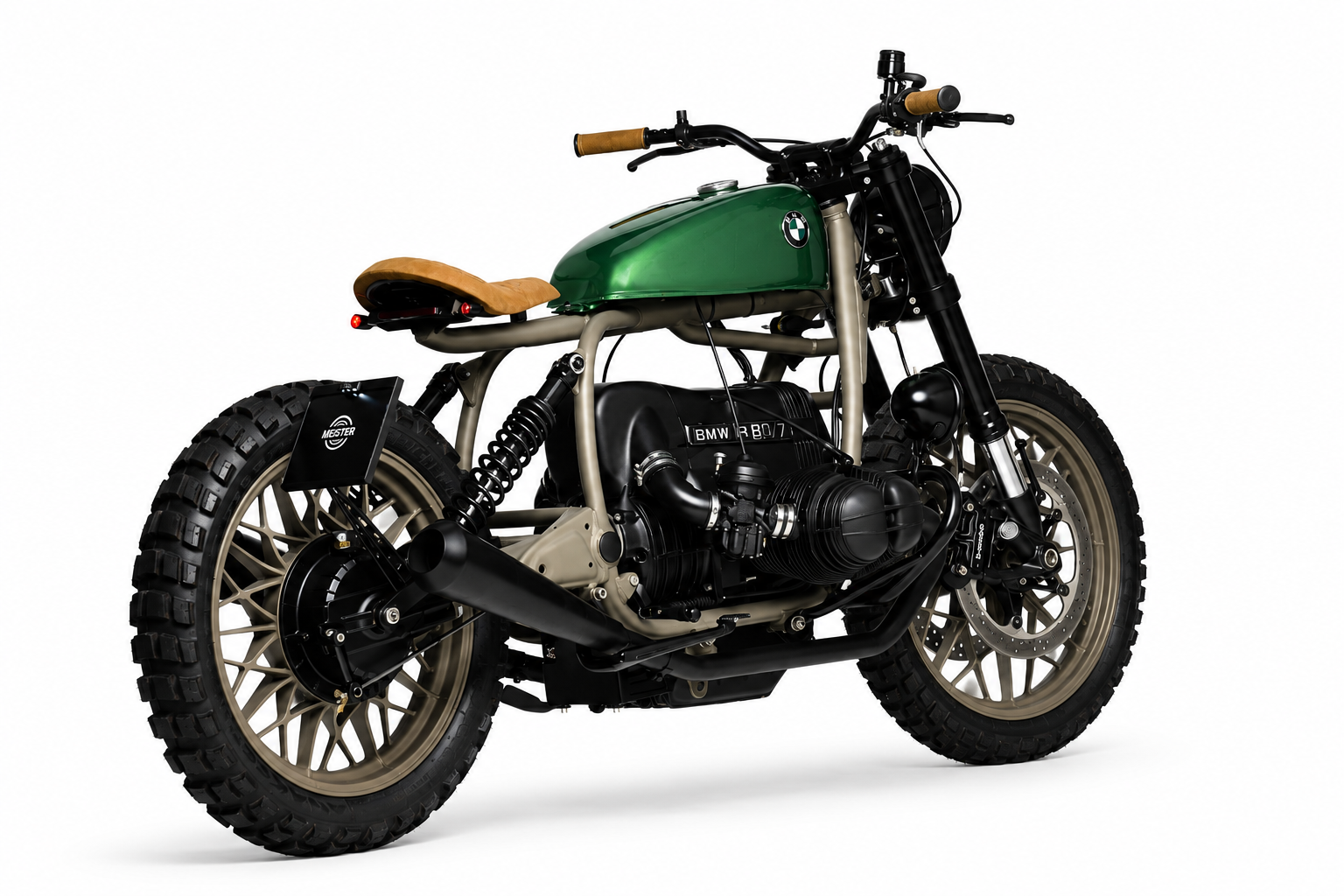
The rear suspension is handled by YSS shock absorbers, providing excellent ride quality and adjustability. The original airbox and starter cover were replaced with custom aluminum components, creating a more compact and refined engine package while eliminating unnecessary plastic parts. Finally, the dual-purpose tires add an influence that perfectly complements the motorcycle’s rugged personality. Combined with the integrated 3-in-1 rear indicators and discreet front turn signals, every component contributes to a single vision: minimalism pushed to its absolute limit.
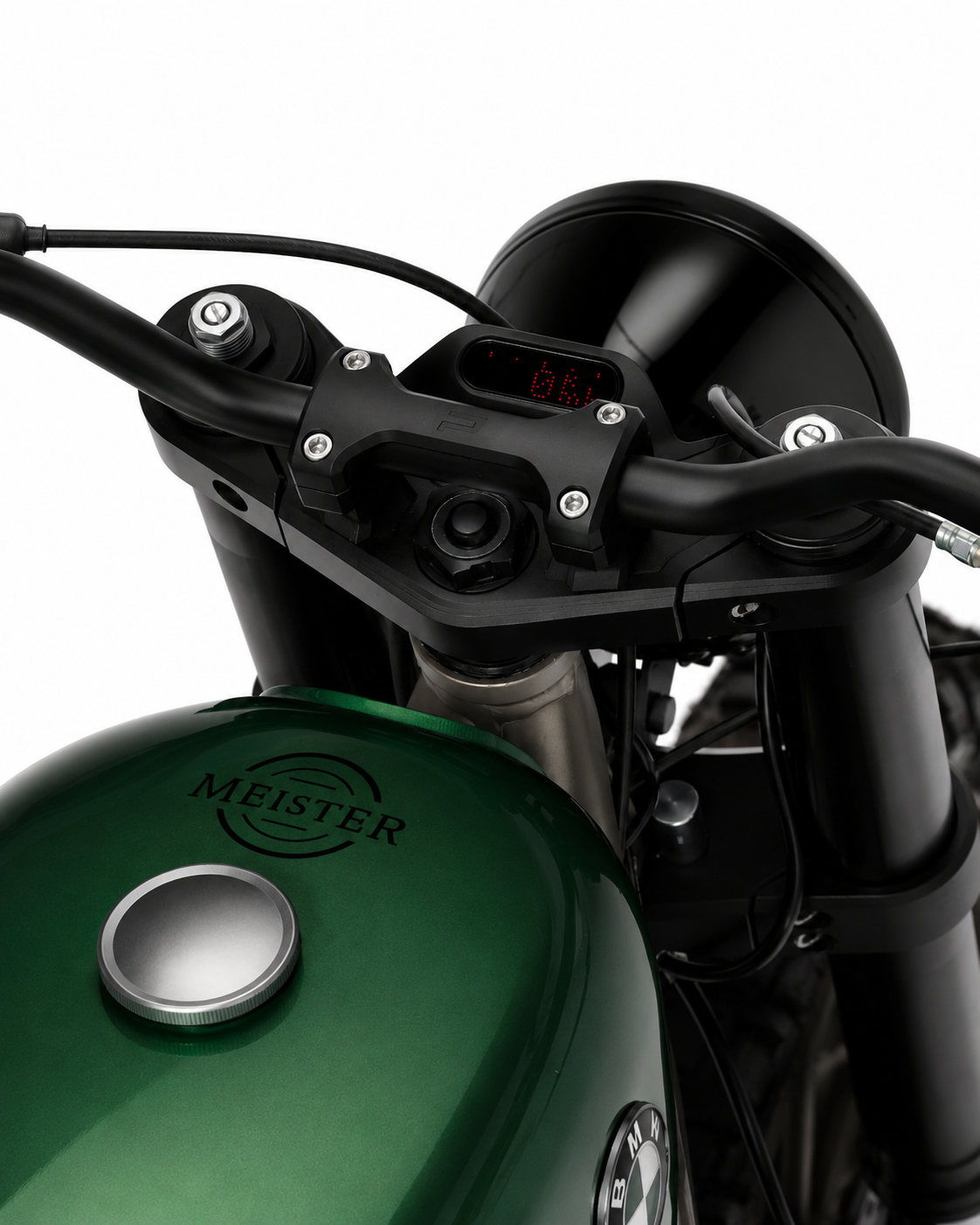
The cockpit perfectly illustrates the philosophy behind this build. A Motogadget Motoscope Mini provides all essential riding information while remaining virtually invisible from most viewing angles. When looking at the motorcycle from the front, no traditional instrument cluster interrupts the design. The handlebars, fuel tank, and fork assembly remain the visual focus, preserving the purity of the overall silhouette.
The result is a motorcycle that appears deceptively simple, despite the significant engineering hidden beneath its minimalist appearance.